

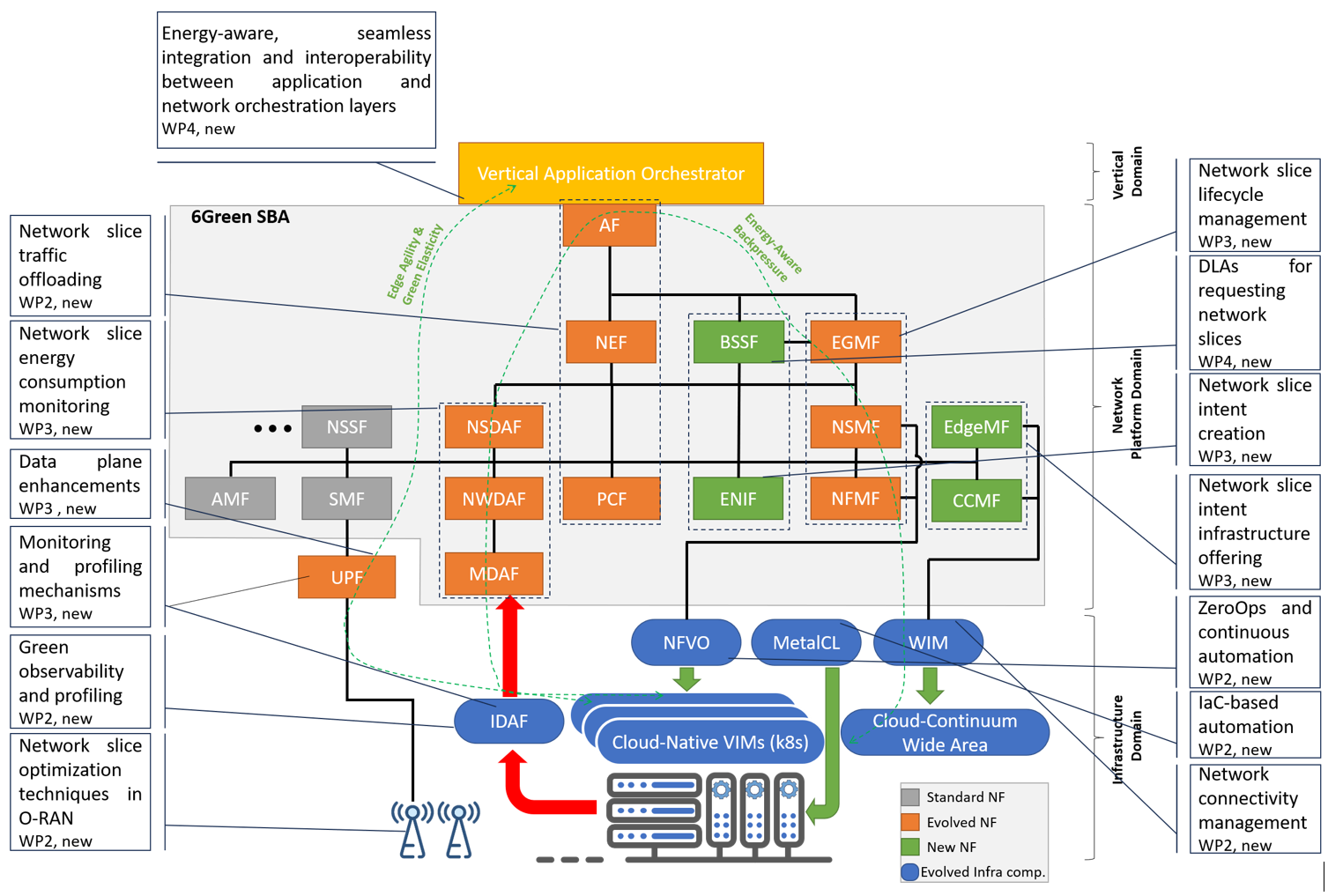
WP2
- Network connectivity management and traffic offloading mechanisms
- Zero-touch cloud-native orchestration mechanisms through service-mesh techniques and automation mechanisms
- Power management mechanisms for the core, transport and access part of the continuum by considering serverless workloads
- Network slice lifecycle management and optimization techniques, including energy-aware network slice management in O-RAN and multi-provider settings
- Green observability and profiling mechanisms
- Optimal network slicing mechanisms for slice deployments within O-RAN and Core network architectures
- Rating Operator for customizable Key Performance Indicators and related interfaces
- Monitoring Pace Scheduler for dynamically adjusting collection intervals based on system behaviour patterns.
WP3
- 6Green SBA final implementation, completing the architectural evolution and the high-level description of the ‘Edge Agility’, ‘Green Elasticity’ and ‘Energy-aware Backpressure’
- Finalisation of all individual network functions (NFs), as well as their full implementation, integration and validation into the 6Green 5/6G SBA architecture
- Synchronisation with the enabling technologies of WP2 and the orchestration of vertical applications from WP4
- Integration of data plane enhancements (steering/offloading) with the segmentation lifecycle mechanisms and new UPF to balance performance requirements with energy consumption targets
- Monitoring and profiling mechanisms, including the study of non-periodic packet sampling techniques to collect status data only during significant events.
- Development of ML-powered multi-criteria policies to minimise resource wastage and implementation costs, whilst maximising revenue
WP4
- Identification of the roles, interests, and the potential impact of green business models for the various stakeholders involved in the 5/6G ecosystem
- Definition of green business models to ensure the appeal and economic viability of the project’s outcomes, refined using Lean Canvas and SWOT analyses
- Conception of DLAs that include energy and carbon footprint considerations into the process for requesting network slices
- MILP-based incentivisation framework and evaluation of the cost-effectiveness of different green ICT strategies
- VAO design for energy-aware, seamless integration and interoperability between application and network orchestration layers, including the implementation of the AF functionality
- Definition of the operations to be supported by the VAO for Day-0/1/2/N, as well as the relevant workflows
- Definition of vertical layer policies aligned with WP5 demonstrators
WP5
- Development and integration of all 6Green testbeds towards their operational state.
- Definition of requirements, integration and deployment of vertical applications
- Definition of the 6Green evaluation framework, including component-level evaluation, SBA frameworks and performance evaluation
- Validation of SBA components and 6Green integrated frameworks and solutions
- Development of the use cases and their deployment, including vertical applications, in the 6Green ecosystem
- Performance evaluation through use cases testing and demonstration activities which included use cases’ specific KPIs and key 6Green functionalities, i.e., Edge agility, Green-elasticity, and Energy-Aware Backpressure